
ISSN :1674-2370
CN :32-1785/TV
| Citation: | Daniel R. Ramos, Silvio D. Aguilar, Blanca Astray, Laura Rodríguez-Lorenzo, J. Arturo Santaballa, Moisés Canle. 2026: An efficient, green, and easily recoverable macroscopic photocatalyst for upscaling solar water treatment. Water Science and Engineering, 19(3): 321-331. doi: 10.1016/j.wse.2026.06.006

|

| [1] |
Waldman RA, DeWane ME, Sloan SB, King B, Grant-Kels JM. Dupilumab ocular surface disease occurs predominantly in patients receiving dupilumab for atopic dermatitis: a multi-institution retrospective chart review. J Am Acad Dermatol 2019;85:735-736.
|
| [2] |
Fachler T, Shreberk-Hassidim R, Molho-Pessach V. Dupilumab-induced ocular surface disease: a systematic review. J Am Acad Dermatol 2022;86:486-487.
|
| [3] |
You L, Kruse FE, Volcker HE. Neurotrophic factors in the human cornea. Invest Ophthalmol Vis Sci 2000;41:692-702.
|
| [4] |
Melgarejo E, Medina MA, Sanchez-Jimenez F, Urdiales JL. Monocyte chemoattractant protein-1: a key mediator in inflammatory processes. Int J Biochem Cell Biol 2009;41:998-1001.
|
| [5] |
Rios JD, Ghinelli E, Gu J, Hodges RR, Dartt DA. Role of neurotrophins and neurotrophin receptors in rat conjunctival goblet cell secretion and proliferation. Invest Ophthalmol Vis Sci 2007;48:1543-1551.
|
| [6] |
Chan J, Lim G, Lee R, Tong L. A systematic review of tear vascular endothelial growth factor and external eye disease. Int J Mol Sci 2024;25:1369.
|
| [7] |
Torricelli AM, Santhanam A, Wu J, Singh V, Wilson SE. The corneal fibrosis response to epithelial-stromal injury. Exp Eye Res 2016;142:110-118.
|
| [8] |
Fabiani C, Sota J, Tosi GM, Franceschini R, Frediani B, Galeazzi M, et al. The emerging role of interleukin (IL)-1 in the pathogenesis and treatment of inflammatory and degenerative eye diseases. Clin Rheumatol 2017;36:2307-2318.
|
| [9] |
Hiroshi A, Jun S, Yukiko S, Noriko I, Satoru Y. Evaluation of chemokine mRNA expression to assess allergic inflammation of the ocular surface in chronic allergic conjunctival diseases. Cornea 2019;38:706-712.
|
| [10] |
Hu J, Gao N, Zhang Y, Chen X, Li J, Bian F, et al. IL-33/ST2/IL-9/IL-9R signaling disrupts ocular surface barrier in allergic inflammation. Mucosal Immunol 2020;13:919-930.
|
| [11] |
Dohlman TH, Ding J, Dana R, Chauhan SK. T cell-derived granulocyte-macrophage colony-stimulating factor contributes to dry eye disease pathogenesis by promoting CD11b+ Myeloid cell maturation and migration. Invest Ophthalmol Vis Sci 2017;58:1330-1336.
|
| [12] |
Patra VK, Woltsche N, Cerpes U, Bokanovic D, Repelnig M, Joshi A, et al. Persistent neutrophil infiltration and unique ocular surface microbiome typify dupilumab-associated conjunctivitis in patients with atopic dermatitis. Ophthalmol Sci 2024;4:100340.
|
| [13] |
Achten RE, van Luijk CM, van der Rijst LP, Bakker D, Spekhorst L, Zuithoff N, et al. Identification of risk factors for dupilumab-associated ocular surface disease in patients with atopic dermatitis. Acta Derm Venereol 2022;102:adv00666.
|
| [14] |
Achten R, Thijs J, van der Wal M, van Luijk C, Bakker D, Knol E, et al. Ocular surface disease in moderate-to-severe atopic dermatitis patients and the effect of biological therapy. Clin Exp Allergy 2024;54:241-252.
|
| [15] |
van der Rijst LP, van Luijk CM, van der Kamp S, Zuithoff NPA, de Boer JH, de Bruin-Weller MS, et al. Dupilumab-associated ocular surface disease in paediatric atopic dermatitis patients: results from the BioDay registry. Clin Exp Allergy 2025;55:391-402.
|
| [16] |
Fernandez Perez, M.I., 2002. reportMecanismos De Oxidacion Y Fotooxidacion De Compuestos De Relevancia Bioquimica Y Medioambiental: 1. Halogenacion De Aminoacidos Azufrados. 2. Fotodegradacion De Biocidas Tipo S.Triazina. Ph.D. Dissertation. Universidade da Coruna, A Coruna, Spain (in Spanish). http://hdl.handle.net/2183/11706.es.
|
| [17] |
Hanaor, D.A.H., Sorrell, C.C., 2011. Review of the anatase to rutile phase transformation. J. Mater. Sci. 46, 855-874. https://doi.org/10.1007/s10853-010-5113-0.
|
| [18] |
Herrmann, J.M., 1999. Heterogeneous photocatalysis: Fundamentals and applications to the removal of various types of aqueous pollutants. Catal. Today 53(1), 115-129. https://doi.org/10.1016/S0920-5861(99)00107-8.
|
| [19] |
Ibhadon, A.O., Fitzpatrick, P., 2013. Heterogeneous photocatalysis: Recent advances and applications. Catalysts 3(1), 189-218. https://doi.org/10.3390/catal3010189.
|
| [20] |
Jimenez-Bautista, K., Gasco, A., Ramos, D.R., Palomo, E., Muelas-Ramos, V., Canle, M., Hermosilla, D., Bahamonde, A., 2023. Solar-assisted photodegradation of pesticides over pellet-shaped TiO2-kaolin catalytic macrocomposites at semi-pilot-plant scale: Elucidation of photo-mechanisms and water matrix effect. J. Clean. Prod. 426, 139203. https://doi.org/10.1016/j.jclepro.2023.139203.
|
| [21] |
Mantoura, R.F.C., Riley, J.P., 1975. The analytical concentration of humic substances from natural waters. Anal. Chim. Acta 76(1), 97-106. https://doi.org/10.1016/S0003-2670(01)81990-5.
|
| [22] |
Pan, J., Sun, H., Chen, K., Zhang, Y., Shan, P., Shi, W., Guo, F., 2023. Nanodiamonds decorated yolk-shell ZnFe2O4 sphere as magnetically separable and recyclable composite for boosting antibiotic degradation performance. Chin. J. Chem. Eng. 54, 162-172. https://doi.org/10.1016/j.cjche.2022.04.008.
|
| [23] |
Pastorino, P., Prearo, M., 2020. High-mountain Lakes, indicators of global change: Ecological characterization and environmental pressures. Diversity 12(6), 260. https://doi.org/10.3390/d12060260.
|
| [24] |
Ramos, D.R., Iazykov, M., Fernandez, M.I., Santaballa, J.A., Canle, M., 2021. Mechanical stability is key for large-scale implementation of photocatalytic surface-attached film technologies in water treatment. Frontiers in Chemical Engineering 3, 688498. https://doi.org/10.3389/fceng.2021.688498.
|
| [25] |
Ramos, D.R., Canle, M., Santaballa, J.A., Aguilar, S.D., 2023. Elemento Fotocatalizador Para Descontaminacion De Fluidos (Spanish Patent No. P202031314). Oficina Espanola de Patentes y Marcas. https://consultas2.oepm.es/InvenesWeb/detalle?referencia=P202031314.es.
|
| [26] |
Ren, G., Han, H., Wang, Y., Liu, S., Zhao, J., Meng, X., Li, Z., 2021. Recent advances of photocatalytic application in water treatment: A review. Nanomaterials 11(7), 1804. https://doi.org/10.3390/nano11071804.
|
| [27] |
Sachs, J.D., 2012. From millennium development goals to sustainable development goals. Lancet 379(9832), 2206-2211. https://doi.org/10.1016/S0140-6736(12)60685-0.
|
| [28] |
Salaices, M., Serrano, B., de Lasa, H.I., 2001. Photocatalytic conversion of organic pollutants extinction coefficients and quantum efficiencies. Ind. Eng. Chem. Res. 40(23), 5455-5464. https://doi.org/10.1021/ie0102551.
|
| [29] |
Sanchez, M., Ramos, D.R., Fernandez, M.I., Aguilar, S., Ruiz, I., Canle, M., Soto, M., 2022. Removal of emerging pollutants by a 3-step system: Hybrid digester, vertical flow constructed wetland and photodegradation post-treatments. Sci. Total Environ. 842, 156750. https://doi.org/10.1016/j.scitotenv.2022.156750.
|
| [30] |
Sanchez, M., Torres, E., Ramos, D.R., Aguilar, S.D., Fernandez, M.I., Ruiz, I., Canle, M., Soto, M., 2025. Elimination of faecal indicator microorganisms from wastewater by combining constructed wetlands and heterogeneous photocatalysis: From laboratory to pilot-scale implementation. Front. Environ. Sci. Eng. 19(12), 174. https://doi.org/10.1007/s11783-025-2094-4.
|
| [31] |
Tang, Y., Yin, M., Yang, W., Li, H., Zhong, Y., Mo, L., Liang, Y., Ma, X., Sun, X., 2019. Emerging pollutants in water environment: Occurrence, monitoring, fate, and risk assessment. Water Environ. Res. 91(10), 984-991. https://doi.org/10.1002/wer.1163.
|
| [32] |
Tong, W., Forster, M., Dionigi, F., Dresp, S., Sadeghi Erami, R., Strasser, P., Cowan, A.J., Farras, P., 2020. Electrolysis of low-grade and saline surface water. Nat. Energy 5, 367-377. https://doi.org/10.1038/s41560-020-0550-8.
|
| [33] |
Vergragt, P., Akenji, L., Dewick, P., 2014. Sustainable production, consumption, and livelihoods: Global and regional research perspectives. J. Clean. Prod. 63, 1-12. https://doi.org/10.1016/j.jclepro.2013.09.028.
|
| [34] |
Wang, J., Xu, L., 2012. Advanced oxidation processes for wastewater treatment: Formation of hydroxyl radical and application. Crit. Rev. Environ. Sci. Technol. 42(3), 251-325. https://doi.org/10.1080/10643389.2010.507698.
|
| [35] |
Wang, X., Wang, C., Zhu, T., Gong, P., Fu, J., Cong, Z., 2019. Persistent organic pollutants in the polar regions and the Tibetan Plateau: A review of current knowledge and future prospects. Environmental Pollution 248, 191-208. https://doi.org/10.1016/j.envpol.2019.01.093.
|
| [36] |
Xu, H., Hao, Z., Feng, W., Wang, T., Li, Y., 2021. Mechanism of photodegradation of organic pollutants in seawater by TiO2-based photocatalysts and improvement in their performance. ACS Omega 6(45), 30698-30707. https://doi.org/10.1021/acsomega.1c04604.
|
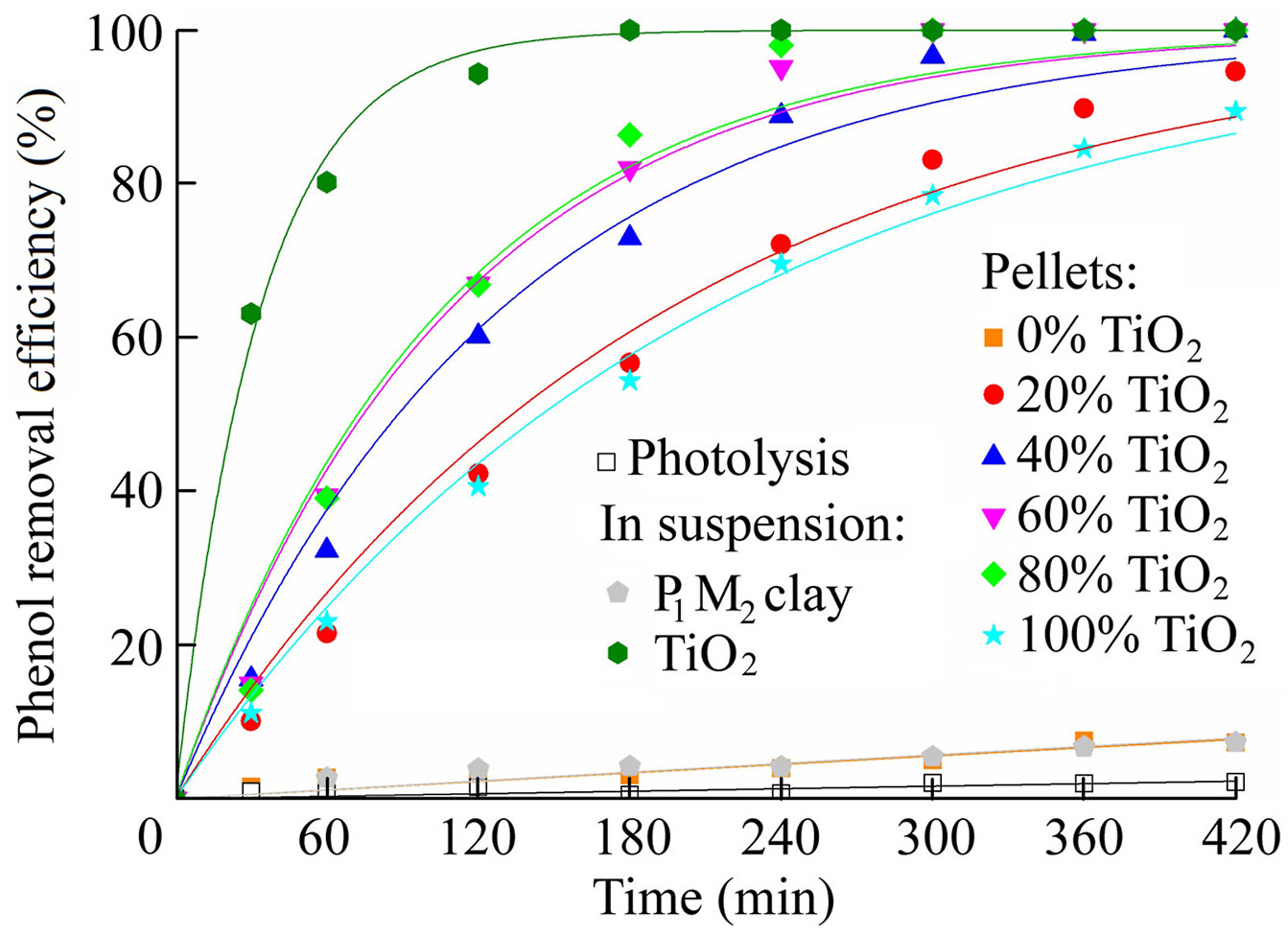
Figures(1)


 DownLoad: