
ISSN :1674-2370
CN :32-1785/TV
| Citation: | Suhaib S. Salih, Muayad A. Shihab, Mohammed Kadhom, Noor Albayati, Tushar K. Ghosh. 2025: Simultaneous removal of organic and inorganic pollutants onto chitosan-coated pumice adsorbent. Water Science and Engineering, 18(4): 486-495. doi: 10.1016/j.wse.2025.07.002

|

| [1] |
Ahmad, R., Ansari, K., 2021. Comparative study for adsorption of Congo red and methylene blue dye on chitosan modified hybrid nanocomposite. Process Biochem. 108, 90-102. https://doi.org/10.1016/j.procbio.2021.05.013.
|
| [2] |
Ahmed, S.H., Abduljabbar, R.A., 2023. Removal of methylene blue dye from aqueous solutions using Cordia myxa fruits as a low-cost Aadsorbent. Tikrit J. Eng. Sci. 30(3), 90-99.
|
| [3] |
Alhamd, S.J., Manteghian, M., Abdulhameed, M.A., Ibrahim, T.A., Jarmondi, K.D., 2024. Efficient removal of heavy metals from crude oil using high surface area adsorbent media: Vanadium as a case study. Tikrit J. Eng. Sci. 31(2), 1-9.
|
| [4] |
Ali, A.W., Jassim, N.J., Fares, M.N., 2025. Preparation and characterization of MgO/Fe3O4 activated carbon with statistically optimization for oil uptake from emulsion. Tikrit J. Eng. Sci. 32(1), 1-13.
|
| [5] |
Ali, H., Tiama, T.M., Ismail, A.M., 2021. New and efficient NiO/chitosan/polyvinyl alcohol nanocomposites as antibacterial and dye adsorptive films. Int. J. Biol. Macromol. 186, 278-288. https://doi.org/10.1016/j.ijbiomac.2021.07.055.
|
| [6] |
Alqarni, A.S., 2022. A comprehensive review on properties of sustainable concrete using volcanic pumice powder ash as a supplementary cementitious material. Constr. Build. Mater. 323, 126533. https://doi.org/10.1016/j.conbuildmat.2022.126533.
|
| [7] |
Azeez, N.R., Salih, S.S., Kadhom, M., Mohammed, H.N., Ghosh, T.K., 2024. Enhanced termination of zinc and cadmium ions from wastewater employing plain and chitosan-modified mxenes: Synthesis, characterization, and adsorption performance. Green Chem. Eng. 5(3), 339-347. https://doi.org/10.1016/j.gce.2023.08.003.
|
| [8] |
Bai, B., Bai, F., Li, X., Nie, Q., Jia, X., Wu, H., 2022. The remediation efficiency of heavy metal pollutants in water by industrial red mud particle waste. Environmental Technology & Innovation 28, 102944. https://doi.org/10.1016/j.eti.2022.102944.
|
| [9] |
Balakrishnan, A., Appunni, S., Chinthala, M., Jacob, M.M., Vo, D.V.N., Reddy, S.S., Kunnel, E.S., 2023. Chitosan-based beads as sustainable adsorbents for wastewater remediation: A review. Environ. Chem. Lett. 21(3), 1881-1905. https://doi.org/10.1007/s10311-023-01563-9.
|
| [10] |
Chen, K., Dong, H., Ni, Z., Zhao, Y., Qian, Y., Wang, Y., Xu, K., 2024. Selective extraction of anionic and cationic dyes using tailored hydrophobic deep eutectic solvents. Talanta. 268, 125312. https://doi.org/10.1016/j.talanta.2023.125312.
|
| [11] |
Daud, N.F.M., 2006. Batch adsorption of manganese from palm oil mill effluent onto activated cow bone powder. ARPN Journal of Engineering and Applied Sciences 11(4), 2627-2631.
|
| [12] |
Ferreira, D.C.M., Dos Santos, T.C., dos Reis Coimbra, J.S., de Oliveira, E.B., 2023. Chitosan/carboxymethylcellulose polyelectrolyte complexes (PECs) are an effective material for dye and heavy metal adsorption from water. Carbohydr. Polym. 315, 120977. https://doi.org/10.1016/j.carbpol.2023.120977.
|
| [13] |
Goswami, R., Mishra, A., Mishra, P.K., Rajput, A., 2024. Linear and nonlinear regression modelling of industrial dye adsorption using nanocellulose@ chitosan nanocomposite beads. Int. J. Biol. Macromol. 274, 133512. https://doi.org/10.1016/j.ijbiomac.2024.133512.
|
| [14] |
Hassan, A., Das, N., 2024. Triptycene-based cationic porous organic polymer for the swift and effective removal of organic and inorganic anionic water pollutants. ACS Appl. Eng. Mater. 2(1), 56-66. https://doi.org/10.1021/acsaenm.3c00562.
|
| [15] |
Ibrahim, A.K., Ahmed, S.H., Abduljabbar, R.A., 2024. Adsorption of Congo red dye from aqueous solutions using an eco-friendly adsorbent derived from buckthorn fruits. Tikrit J. Eng. Sci. 31(1), 182-192.
|
| [16] |
Ijaz, I., Bukhari, A., Gilani, E., Nazir, A., Zain, H., Bukhari, A., Shaheen, A., Hussain, S., Imtiaz, A., 2023. Functionalization of chitosan biopolymer using two-dimensional metal-organic frameworks and MXene for rapid, efficient, and selective removal of lead(II) and methyl blue from wastewater. Process Biochem. 129, 257-267. https://doi.org/10.1016/j.procbio.2023.03.029.
|
| [17] |
Kim, U.J., Lee, Y.R., Kang, T.H., Choi, J.W., Kimura, S., Wada, M., 2017. Protein adsorption of dialdehyde cellulose-crosslinked chitosan with high amino group contents. Carbohydr. Polym. 163, 34-42. https://doi.org/10.1016/j.carbpol.2017.01.052.
|
| [18] |
Lee, H.S., Shin, H.S., 2021. Competitive adsorption of heavy metals onto modified biochars: Comparison of biochar properties and modification methods. J. Environ. Manage. 299, 113651. https://doi.org/10.1016/j.jenvman.2021.113651.
|
| [19] |
Li, S., Wang, C., Liu, Y., Liu, Y., Cai, M., Zhao, W., Duan, X., 2023. S-scheme MIL-101 (Fe) octahedrons modified Bi2WO6 microspheres for photocatalytic decontamination of Cr(VI) and tetracycline hydrochloride: Synergistic insights, reaction pathways, and toxicity analysis. Chem. Eng. J. 455, 140943. https://doi.org/10.1016/j.cej.2022.140943.
|
| [20] |
Mahdy, S.A., Al-Naseri, H., 2024. Effect of magnesium oxide nanoparticles (MgO) on wastewater treatment and electric current generation using microbial fuel cell technology. Tikrit J. Eng. Sci. 31(2), 219-228.
|
| [21] |
Mouhamadou, S., Dalhatou, S., Obada, D.O., Fryda, L., Mahieu, A., Bonnet, P., Caperaa, C., Kane, A., Massai, H., Zeghioud, H., 2023. Synthesis of Piliostigma reticulatum decorated TiO2 based composite and its application towards Cr(VI) adsorption and bromophenol blue degradation: Nonlinear kinetics, equilibrium modelling and optimisation photocatalytic parameters. J. Environ. Chem. Eng. 11(1), 109273. https://doi.org/10.1016/j.jece.2023.109273.
|
| [22] |
Mubarak, A.S., Salih, S.S., Kadhom, M., Ghosh, T.K., 2025a. Competitive and non-competitive adsorption of Cd(II) and Pb(II) from aqueous solution using Zr-BADS metal organic frameworks. Sustainable Chemistry for the Environment 9, 100231. https://doi.org/10.1016/j.scenv.2025.100231.
|
| [23] |
Mubarak, A.S., Salih, S.S., Kadhom, M., Ghosh, T.K., 2025b. Removal of heavy metals from contaminated water using Metal-Organic Frameworks (MOFs): A review on techniques and applications. Mater. Sci. Eng. B. 315, 118105. https://doi.org/10.1016/j.mseb.2025.118105.
|
| [24] |
Oyekanmi, A.A., Katibi, K.K., Omar, R.C., Ahmad, A., Elbidi, M., Alshammari, M.B., Shitu, I.G., 2024. A novel oil palm frond magnetic biochar for the efficient adsorption of crystal violet and sunset yellow dyes from aqueous solution: Synthesis, kinetics, isotherm, mechanism and reusability studies. Appl. Water Sci. 14(2), 13. https://doi.org/10.1007/s13201-023-02060-8.
|
| [25] |
Oyekanmi, A.A., Royahu, C.O., Ahmad, A., Dele-Afolabi, T.T., Alshammari, M.B., Imteaz, M., 2024. A novel oyster shell biocomposite for the efficient adsorptive removal of cadmium and lead from aqueous solution: Synthesis, process optimization, modelling and mechanism studies. PLoS One 19(2), e0294286. https://doi.org/10.1371/journal.pone.0294286.
|
| [26] |
Paiman, S.H., Rahman, M.A., Uchikoshi, T., Abdullah, N., Othman, M.H.D., Jaafar, J., Abas, K.H., Ismail, A.F., 2020. Functionalization effect of Fe-type MOF for methylene blue adsorption. J. Saudi Chem. Soc. 24(11), 896-905. https://doi.org/10.1016/j.jscs.2020.09.006.
|
| [27] |
Podgorbunskikh, E., Kuskov, T., Rychkov, D., Lomovskii, O., Bychkov, A., 2022. Mechanical amorphization of chitosan with different molecular weights. Polymers 14(20), 4438. https://doi.org/10.3390/polym14204438.
|
| [28] |
Popoola, L.T., 2019. Characterization and adsorptive behaviour of snail shell-rice husk (SS-RH) calcined particles (CPs) towards cationic dye. Heliyon 5(1), e01153. https://doi.org/10.1016/j.heliyon.2019.e01153.
|
| [29] |
Prihatdini, R.W., Suratman, A., Siswanta, D., 2023. Linear and nonlinear modeling of kinetics and isotherm of malachite green dye adsorption to trimellitic-modified pineapple peel. Materials Today: Proceedings 88, 33-40. https://doi.org/10.1016/j.matpr.2023.07.108.
|
| [30] |
Qureshi, T.A., Gadhi, T.A., Khokhar, D.A., Ali, I., Memon, N., Channa, N., Bakhat, S., Rafique, T., Mahar, R.B., 2023. Insight on the properties of pumice mineral for the combined adsorption distillation of membrane reject water. Minerals 13(9), 1131. https://doi.org/10.3390/min13091131.
|
| [31] |
Ray, S., Vashishth, R., 2024. From water to plate: Reviewing the bioaccumulation of heavy metals in fish and unraveling human health risks in the food chain. Emerg. Contam. 10(4), 100358. https://doi.org/10.1016/j.emcon.2024.100358.
|
| [32] |
Saini, K., Kumari, A., Sahoo, A., Pant, K.K., Bhaskar, T., 2023. Eggshell-lignin carbon composite for methyl orange removal from wastewater. Ind. Eng. Chem. Res. 62(38), 15499-15510. https://doi.org/10.1021/acs.iecr.3c02029.
|
| [33] |
Salih, S.S., Mohammed, H.N., Abdullah, G.H., Kadhom, M., Ghosh, T.K., 2020. Simultaneous removal of Cu (II), Cd (II), and industrial dye onto a composite chitosan biosorbent. J. Polym. Environ. 28(1), 354-365. https://doi.org/10.1007/s10924-019-01612-x.
|
| [34] |
Salih, S.S., Shihab, M.A., Mohammed, H.N., Kadhom, M., Albayati, N., Ghosh, T.K., 2024. Chitosan-vermiculite composite adsorbent: Preparation, characterization, and competitive adsorption of Cu (II) and Cd (II) ions. J. Water Process Eng. 59, 105044.
|
| [35] |
Sriram, G., Thangarasu, S., Selvakumar, K., Kurkuri, M., Dhineshbabu, N.R., Oh, T.H., 2024. Effective removal of Rose Bengal using Ni-Co-Zn layered triple hydroxide: Studies on batch adsorption, mechanism, selectivity, co-ions, and reusability. Colloids Surf. A Physicochem. Eng. Asp. 685, 133199. https://doi.org/10.1016/j.colsurfa.2024.133199.
|
| [36] |
Wang, L., Li, J., Zhong, G., Li, J., Lu, X., Wang, S., Tang, Y., 2023a. Diatom biochar recovered Au(III) efficiently from both synthetic and real electroplating wastewaters. ACS ES&T Water 3(5), 1395-1405. https://doi.org/10.1021/acsestwater.3c00066.
|
| [37] |
Wang, X., Xu, Q., Zhang, L., Pei, L., Xue, H., Li, Z., 2023b. Adsorption of methylene blue and Congo red from aqueous solution on 3D MXene/carbon foam hybrid aerogels: A study by experimental and statistical physics modeling. J. Environ. Chem. Eng. 11(1), 109206. https://doi.org/10.1016/j.jece.2022.109206.
|
| [38] |
Wang, X., Zhang, R., Li, Z., Yan, B., 2022. Adsorption properties and influencing factors of Cu(II) on polystyrene and polyethylene terephthalate microplastics in seawater. Sci. Total Environ. 812 (2022) 152573. https://doi.org/10.1016/j.scitotenv.2021.152573.
|
| [39] |
Wen, Z., Xi, J., Lu, J., Zhang, Y., Cheng, G., Zhang, Y., Chen, R., 2021. Porous biochar-supported MnFe2O4 magnetic nanocomposite as an excellent adsorbent for simultaneous and effective removal of organic/inorganic arsenic from water. J. Hazard. Mater. 411, 124909. https://doi.org/10.1016/j.jhazmat.2020.124909.
|
| [40] |
Yaseen, S.M., Salih, S.S., Kadhom, M., Mohammed, H.N., 2023. Enhancement of phenol recovery from wastewater by nanofluid utilizing liquid-liquid extraction method in a membrane-based contactor. Chem. Eng. Res. Des. 196, 404-412. https://doi.org/10.1016/j.cherd.2023.06.064.
|
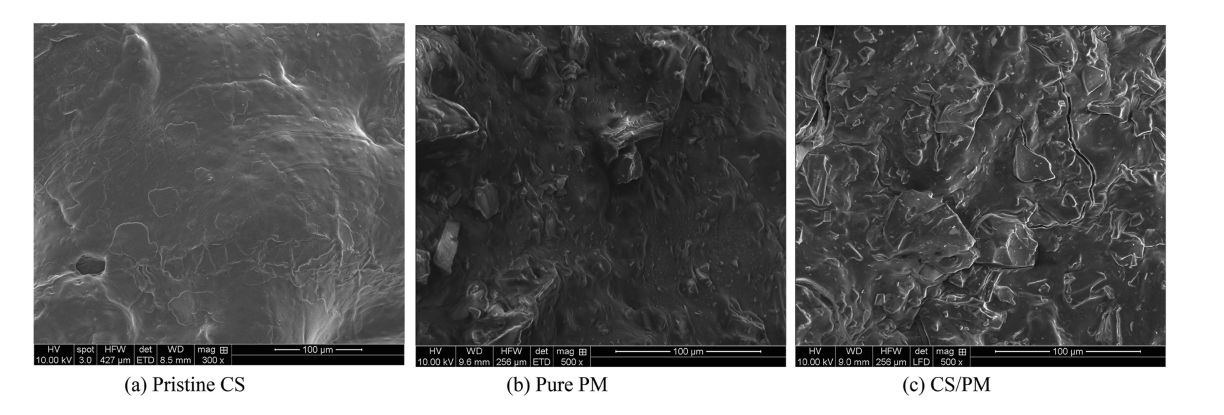
Figures(1)


 DownLoad: