
ISSN :1674-2370
CN :32-1785/TV
| Citation: | Wan-qi Li, Ying-hua Li, Chao-qun Zhu, Kun Wang, Xin Guo, Ming-chuan Zhang. 2026: Mechanisms of microbially induced calcium carbonate precipitation for simultaneous immobilization of lead—chromium composite contaminants in water. Water Science and Engineering, 19(2): 280-290. doi: 10.1016/j.wse.2026.03.004

|

| [1] |
Amiri, A., Bundur, Z.B., 2018. Use of corn-steep liquor as an alternative carbon source for biomineralization in cement-based materials and its impact on performance. Construction and Building Materials 165, 655-662. https://doi.org/10.1016/j.conbuildmat.2018.01.070.
|
| [2] |
Bian, Z.J., Dong, W., Li, X., Song, Y., Huang, H., Hong, K., Hu, K., 2024. Enrichment of terbium(III) under synergistic effect of biosorption and biomineralization by Bacillus sp. DW015 and Sporosarcina pasteurii. Microbiology Spectrum 12(8), 760. https://doi.org/10.1128/spectrum.00760-24.
|
| [3] |
Comadran-Casas, C., Bruggemann, N., Jorat, M.E., 2024. Greenhouse gas fluxes of microbial-induced calcite precipitation at varying urea-to-calcium concentrations. European Journal of Soil Science 75(3), e13516. https://doi.org/10.1111/ejss.13516.
|
| [4] |
Comadran-Casas, C., Unluer, C., Bass, A.M., Macdonald, J., Najafi, E.K., Spruzeniece, L., Gauchotte-Lindsay, C., 2025. Bioremediation of multiple heavy metals through biostimulation of microbial-induced calcite precipitation at varying calcium-to-urea concentrations. Journal of Hazardous Materials 491, 137691. https://doi.org/10.1016/j.jhazmat.2025.137691.
|
| [5] |
Deng, J.X., Li, M.J., Tian, Y.K., Zhang, Z., Wu, L., Hu, L., 2023. Using electric field to improve the effect of microbial-induced carbonate precipitation. Sustainability 15(7), 5901. https://doi.org/10.3390/su15075901.
|
| [6] |
Erdmann, N., Strieth, D., 2023. Influencing factors on ureolytic microbiologically induced calcium carbonate precipitation for biocementation. World Journal of Microbiology & Biotechnology 39(2), 61. https://doi.org/10.1007/s11274-022-03499-8.
|
| [7] |
He, P.L., Guo, J.J., Zhang, S.X., 2024. Investigating the potential of microbially induced carbonate precipitation combined with modified biochar for remediation of lead-contaminated loess. Sustainability 16(17), 7550. https://doi.org/10.3390/su16177550.
|
| [8] |
Hu, J., Yang, Y.F., Zhou, Y.X., Xiang, H., Wei, K., 2023. Experimental study of MICP-solidified calcareous sand based on ambient temperature variation in the South China Sea. Sustainability 15(10), 8245. https://doi.org/10.3390/su15108245.
|
| [9] |
Jarwar, M.A., Del Buey, P., Sanz-Montero, M.E., Dumontet, S., Chianese, E., Pasquale, V., 2023. Co-precipitation of Cd, Cr, Pb, Zn, and carbonates using Vibrio harveyi strain isolated from Mediterranean Sea sediment. Minerals 13(5), 627. https://doi.org/10.3390/min13050627.
|
| [10] |
Ji, G.S., Huan, C.C., Zeng, Y., Lyu, Q., Du, Y., Liu, Y., Xu, L., He, Y., Tian, X., Yan, Z., 2024. Microbiologically induced calcite precipitation (MICP) in situ remediated heavy metal contamination in sludge nutrient soil. Journal of Hazardous Materials 473, 134600. https://doi.org/10.1016/j.jhazmat.2024.134600.
|
| [11] |
Jiang, C., Hu, L., He, N., Liu, Y., Zhao, H., 2024a. Remediation of Cr(VI)-contaminated soil based on Cr(VI)-reducing bacterium induced carbonate precipitation. Water Air and Soil Pollution 235(11), 692. https://doi.org/10.1007/s11270-024-07503-9.
|
| [12] |
Jiang, C., Hu, L., He, N., Liu, Y., Zhao, H., Jiang, Z., 2024b. Different calcium sources affect the products and sites of mineralized Cr(VI) by microbially induced carbonate precipitation. Chemosphere 363, 142977. https://doi.org/10.1016/j.chemosphere.2024.142977.
|
| [13] |
Kim, H.J., Shin, B., Lee, Y.S., Park, W., 2017. Modulation of calcium carbonate precipitation by exopolysaccharide in Bacillus sp JH7. Applied Microbiology and Biotechnology 101(16), 6551-6561. 10.1007/s00253-017-8372-8.
|
| [14] |
Kim, Y., Kwon, S., Roh, Y., 2021. Effect of divalent cations (Cu, Zn, Pb, Cd, and Sr) on microbially induced calcium carbonate precipitation and mineralogical properties. Frontiers in Microbiology 12, 646748. https://doi.org/10.3389/fmicb.2021.646748.
|
| [15] |
Kumar, A., Song, H., Mishra, S., Zhang, W., Zhang, Y., Zhang, Q., Yu, Z., 2023. Application of microbial-induced carbonate precipitation (MICP) techniques to remove heavy metal in the natural environment: A critical review. Chemosphere 318, 137894. https://doi.org/10.1016/j.chemosphere.2023.137894.
|
| [16] |
Lai, H., Cui, M, Chu, J., 2023. Effect of pH on soil improvement using one-phase-low-pH MICP or EICP biocementation method. Acta Geotechnica 18(6), 3259-3272. https://doi.org/10.1007/s11440-022-01759-3.
|
| [17] |
Li, X., Wang, Y., Tang, J., Li, K., 2022. Removal behavior of heavy metals from aqueous solutions via microbially induced carbonate precipitation driven by acclimatized Porosarcina pasteurii. Applied Sciences 12(19), 9958. https://doi.org/10.3390/app12199958.
|
| [18] |
Lyu, J., Qin, W., Zhang, C., Li, F., 2020. Nanoparticle accumulation in microbial induced carbonate precipitation: The crucial role of extracellular polymeric substance. Geomicrobiology Journal 37(9), 837-847. https://doi.org/10.1080/01490451.2020.1786866.
|
| [19] |
Mwandira, W., Mavroulidou, M., Joshi, S., Gunn, M.J., 2024. Fruit and vegetable waste used as bacterial growth media for the biocementation of two geomaterials. Science of The Total Environment 947, 174489. https://doi.org/10.1016/j.scitotenv.2024.174489.
|
| [20] |
Qin, J., Cao, H., Xu, Y., He, F., Zhang, F., Wang, W., 2025. Efficient removal of Cr by microbially induced calcium carbonate precipitation. RSC Advances 15(4), 2840-2849. https://doi.org/10.1039/d4ra05829a.
|
| [21] |
Rajasekar, A., Omoregie, A.I., Kui, K.F., 2025. Urease-catalyzed microbial and enzymatic carbonate precipitation for eco-friendly heavy metal remediation. Letters in Applied Microbiology 78(2), ovaf022. https://doi.org/10.1093/lambio/ovaf022.
|
| [22] |
Song, Z., Wu, C., Shen, D., He, M., Zhang, F., 2025. Microbially induced carbonate precipitation under high temperature and high pressure: Implications for geological CO2 storage. Journal of Rock Mechanics and Geotechnical Engineering 17(6), 3872-3882. https://doi.org/10.1016/j.jrmge.2024.09.057.
|
| [23] |
Sujiritha, P.B., Vikash, V.L., Ponesakki, G., Ayyadurai, N., Kamini, N.R., 2024. Microbially induced carbonate precipitation with Arthrobacter creatinolyticus: An eco-friendly strategy for mitigation of chromium contamination. Journal of Environmental Management 365, 121300. https://doi.org/10.1016/j.jenvman.2024.121300.
|
| [24] |
Sun, X., Miao, L., 2020. Application of bio-remediation with Bacillus megaterium for crack repair at low temperature. Journal of Advanced Concrete Technology 18(5), 307-319. https://doi.org/10.3151/jact.18.307.
|
| [25] |
Taharia, M., Dey, D., Das, K., Sukul, U., Chen, J., Banerjee, P., Dey, G., Sharma, R.K., Lin, P., Chen, C., 2024. Microbial induced carbonate precipitation for remediation of heavy metals, ions and radioactive elements: A comprehensive exploration of prospective applications in water and soil treatment. Ecotoxicology and Environmental Safety 271, 115990. https://doi.org/10.1016/j.ecoenv.2024.115990.
|
| [26] |
Wang, H., Yu, S., Sun, L., Wang, Y., Wu., H., Wang, X., 2025a. Pollution assessment and health risk of metals in surface soil near a Pb-Zn mine, Northeast China. Frontiers in Environmental Science 13, 1585272. https://doi.org/10.3389/fenvs.2025.1585272.
|
| [27] |
Wang, J., Pang, S., Zhan, X.Q., Wei, W., Li, X., Wang, L., Huang, X., Zhang, L., 2025b. Improving recycled concrete aggregate performance via microbial-induced calcium carbonate precipitation: Effects of bacterial strains and mineralization conditions. Buildings 15(5), 825. https://doi.org/10.3390/buildings15050825.
|
| [28] |
Wang, S., Fang, L., Dapaah, M.F., Niu, Q., Cheng, L., 2023. Bio-remediation of heavy metal-contaminated soil by microbial-induced carbonate precipitation (MICP)-A critical review. Sustainability 15(9), 7622. https://doi.org/10.3390/su15097622.
|
| [29] |
Xiao, J., Wei, Y., Cai, H., Wang, Z., Yang, T., Wang, Q., Wu, S., 2020. Microbial-induced carbonate precipitation for strengthening soft clay. Advances in Materials Science and Engineering 2020, 8140724. https://doi.org/10.1155/2020/8140724.
|
| [30] |
Xie, Y., Cheng, W., Xue, Z., Rahman, M.M., Wang, L., 2024. Deterioration phenomenon of Pb-contaminated aqueous solution remediation and enhancement mechanism of nano-hydroxyapatite-assisted biomineralization. Journal of Hazardous Materials 470, 134210. https://doi.org/10.1016/j.jhazmat.2024.134210.
|
| [31] |
Xue, Z., Cheng, W., Wang, L., Xie, Y., Qing, P., Shi, C., 2024. Immobilizing lead in aqueous solution and loess soil using microbially induced carbonate/phosphate precipitation (MICP/MIPP) under harsh pH environments. Journal of Hazardous Materials 480, 135884. https://doi.org/10.1016/j.jhazmat.2024.135884.
|
| [32] |
Zambare, N.M., Naser, N.Y., Gerlach, R., Chang, C.B., 2020. Mineralogy of microbially induced calcium carbonate precipitates formed using single cell drop-based microfluidics. Scientific Reports 10(1), 17535. https://doi.org/10.1038/s41598-020-73870-y.
|
| [33] |
Zehner, J., Royne, A., Wentzel, A., Sikorski, P., 2020. Microbial-induced calcium carbonate precipitation: An experimental toolbox for in situ and real time investigation of micro-scale pH evolution. RSC Advances 10(35), 20485-20493. https://doi.org/10.1039/D0RA03897K.
|
| [34] |
Zhang, J., Shi, X., Chen, X., Huo, X., Yu, Z., 2021. Microbial-induced carbonate precipitation: A review on influencing factors and applications. Advances in Civil Engineering 2021, 9974027. https://doi.org/10.1155/2021/9974027.
|
| [35] |
Zhang, K., Tang, C.S., Jiang, N., Pan, X., Liu, B., Wang, Y., Shi, B., 2023. Microbial-induced carbonate precipitation (MICP) technology: A review on the fundamentals and engineering applications. Environmental Earth Sciences 82(9), 229. https://doi.org/10.1007/s12665-023-10899-y.
|
| [36] |
Zhang, L., Wang, W., Yue, C., Shi, Y., 2024. Biogenic calcium improved Cd2+ and Pb2+ immobilization in soil using the ureolytic bacteria Bacillus pasteurii. Science of The Total Environment 921, 171060. https://doi.org/10.1016/j.scitotenv.2024.171060.
|
| [37] |
Zhuang, D., Yao, W., Guo, Y., Chen, Z., Gui, H., Zhao, Y., 2025. Bioremediation of heavy metal-contaminated solution and aged refuse by microbially induced calcium carbonate precipitation: Further insights into Sporosarcina pasteurii. Microorganisms 13(1), 64. https://doi.org/10.3390/microorganisms13010064.
|
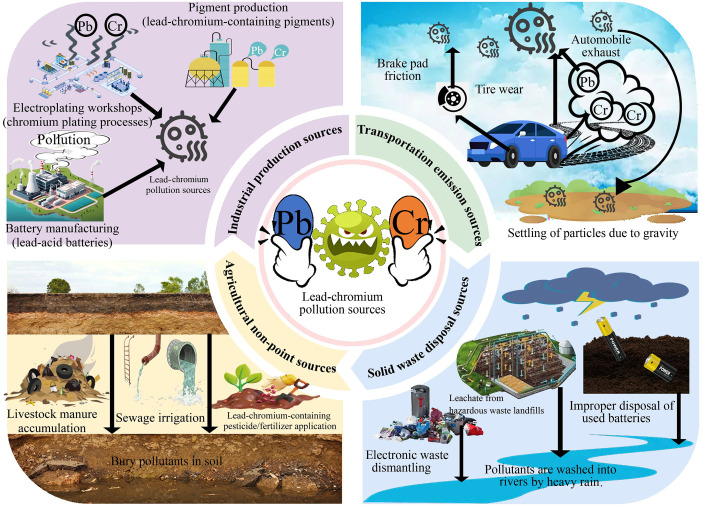
Figures(1)


 DownLoad: