
ISSN :1674-2370
CN :32-1785/TV
| Citation: | Md. Nur Rahman, Akramul Alam. 2026: Performance evaluation of jackfruit seeds and tamarind tree bark as indigenous adsorbents for methylene blue adsorption from synthetic aqueous solutions. Water Science and Engineering, 19(3): 376-387. doi: 10.1016/j.wse.2026.05.003

|

| [1] |
Ali, A.A., Abdul-Hameed, H.M., 2025. Synthesis and characterization of magnetic activated carbon manufactured from palm stones by physical activation to remove lead from aqueous solution. Desalination and Water Treatment 321, 100951. https://doi.org/10.1016/j.dwt.2024.100951.
|
| [2] |
Almeida-Naranjo, C.E., Aldas, M.B., Cabrera, G., Guerrero, V.H., 2021. Caffeine removal from synthetic wastewater using magnetic fruit peel composites: Material characterization, isotherm and kinetic studies. Environmental Challenges 5, 100343. https://doi.org/10.1016/j.envc.2021.100343.
|
| [3] |
Alsubaie, N., Alshamrani, R., Domyati, D., Alahmadi, N., Bannani, F., 2021. Methylene blue dye adsorption onto polyoxometalate ionic liquid supported on bentonite: Kinetic, equilibrium and thermodynamic Studies. Open Journal of Physical Chemistry 11(2), 106-127. https://doi.org/10.4236/ojpc.2021.112006.
|
| [4] |
Annadurai, G., Juang, R.-S., Lee, D.-J., 2002. Use of cellulose-based wastes for adsorption of dyes from aqueous solutions. Journal of Hazardous Materials 92(3), 263-274. https://doi.org/10.1016/S0304-3894(02)00017-1.
|
| [5] |
Babaei, A.A., Alavi, S.N., Akbarifar, M., Ahmadi, K., Ramazanpour Esfahani, A., Kakavandi, B., 2016. Experimental and modeling study on adsorption of cationic methylene blue dye onto mesoporous biochars prepared from agrowaste. Desalination and Water Treatment 57(56), 27199-27212. https://doi.org/10.1080/19443994.2016.1163736.
|
| [6] |
Banerjee, M., Bar, N., Das, S.K., 2021. Cu(II) removal from aqueous solution using the walnut shell: Adsorption study, regeneration study, plant scale-up design, economic feasibility, statistical, and GA-ANN modeling. International Journal of Environmental Research 15(5), 875-891. https://doi.org/10.1007/s41742-021-00362-w.
|
| [7] |
Bangaraiah, P., 2022. Equilibrium and kinetic study on biosorption of chromium using Tamarindus indica as a biosorbent. Current Trends in Biotechnology and Pharmacy 16(3), 300-307. https://doi.org/10.5530/ctbp.2022.3.43.
|
| [8] |
Bensalah, N., Alfaro, M.A.Q., Martinez-Huitle, C.A., 2009. Electrochemical treatment of synthetic wastewaters containing alphazurine A dye. Chemical Engineering Journal 149(1-3), 348-352. https://doi.org/10.1016/j.cej.2008.11.031.
|
| [9] |
Bhat, R.V., Mathur, P., 1998. Changing scenario of food colours in India. Current Science 74(3), 198-202. http://www.jstor.org/stable/24100862.
|
| [10] |
Bhattacharya, S., Bar, N., Rajbansi, B., Das, S.K., 2023. Synthesis of chitosan-nTiO2 nanocomposite, application in adsorptive removal of Cu(II)-Adsorption and desorption study, mechanism, scale-up design, statistical, and genetic algorithm modeling. Applied Organometallic Chemistry 37(6), e7094. https://doi.org/10.1002/aoc.7094.
|
| [11] |
Brahma, R., Ray, S., 2023. Finding out various potentials and possibilities of jackfruit seed and its usage in the industry: A review. Food Production, Processing and Nutrition 5(1), 55. https://doi.org/10.1186/s43014-023-00170-z.
|
| [12] |
Chequer, F.M.D., de Oliveira, G.A.R., Ferraz, E.R.A., Cardoso, J.C., Zanoni, M.V.B., de Oliveira, D.P., 2013. Textile dyes: Dyeing process and environmental Impact. In: Gunay, M. (Ed.), Eco-Friendly Textile Dyeing and Finishing. IntechOpen. https://doi.org/10.5772/53659.
|
| [13] |
Clark, M., 2016. Handbook of Textile and Industrial Dyeing: Principles, Processes and Types of Dyes. Elsevier, Amsterdam.
|
| [14] |
Coates, J., 2000. Interpretation of infrared spectra, a practical approach. In: Meyers, R.A., McKelvy, M.L. (Eds.), Encyclopedia of Analytical Chemistry. Wiley, Hoboken. https://doi.org/10.1002/9780470027318.a5606.
|
| [15] |
Cook, S.M.F., Linden, D.R., 1997. Use of rhodamine WT to facilitate dilution and analysis of atrazine samples in short-term transport studies. Journal of Environmental Quality 26(5), 1438-1440. https://doi.org/10.2134/jeq1997.00472425002600050035x.
|
| [16] |
Cutillas-Barreiro, L., Ansias-Manso, L., Fernandez-Calvino, D., Arias-Estevez, M., Novoa-Munoz, J.C., Fernandez-Sanjurjo, M.J., Alvarez-Rodriguez, E., Nunez-Delgado, A., 2014. Pine bark as bio-adsorbent for Cd, Cu, Ni, Pb and Zn: Batch-type and stirred flow chamber experiments. Journal of Environmental Management 144, 258-264. https://doi.org/10.1016/j.jenvman.2014.06.008.
|
| [17] |
Department of Agricultural Extension (DAE), 2023. Department of Agricultural Extension, Report: 2022-23. DAE, Dhaka.
|
| [18] |
El Kassimi, A., Achour, Y., El Himri, M., Laamari, R., El Haddad, M., 2023. Removal of two cationic dyes from aqueous solutions by adsorption onto local clay: Experimental and theoretical study using DFT method. International Journal of Environmental Analytical Chemistry 103(6), 1223-1244. https://doi.org/10.1080/03067319.2021.1873306.
|
| [19] |
Ghosh, K., Bar, N., Biswas, A.B., Das, S.K., 2019. Removal of methylene blue (aq) using untreated and acid-treated eucalyptus leaves and GA-ANN modelling. The Canadian Journal of Chemical Engineering 97(11), 2883-2898. https://doi.org/10.1002/cjce.23503.
|
| [20] |
Ghosh, K., Bar, N., Baran Biswas, A., Das, S.K., 2022. Removal of methylene blue by H3PO4 treated eucalyptus leaves: Study of fixed bed column and GA-ANN modeling. Sustainable Chemistry and Pharmacy 29, 100774. https://doi.org/10.1016/j.scp.2022.100774.
|
| [21] |
Gulec, F., Williams, O., Kostas, E.T., Samson, A., Stevens, L.A., Lester, E., 2022. A comprehensive comparative study on methylene blue removal from aqueous solution using biochars produced from rapeseed, whitewood, and seaweed via different thermal conversion technologies. Fuel 330, 125428. https://doi.org/10.1016/j.fuel.2022.125428.
|
| [22] |
Gundogdu, A., Ozdes, D., Duran, C., Bulut, V.N., Soylak, M., Senturk, H.B., 2009. Biosorption of Pb(II) ions from aqueous solution by pine bark (Pinus brutia Ten.). Chemical Engineering Journal 153(1), 62-69. https://doi.org/10.1016/j.cej.2009.06.017.
|
| [23] |
Gupta, V.K., Suhas, 2009. Application of low-cost adsorbents for dye removal - A review. Journal of Environmental Management 90(8), 2313-2342. https://doi.org/10.1016/j.jenvman.2008.11.017.
|
| [24] |
Hameed, B.H., 2009. Evaluation of papaya seeds as a novel non-conventional low-cost adsorbent for removal of methylene blue. Journal of Hazardous Materials 162(2), 939-944. https://doi.org/10.1016/j.jhazmat.2008.05.120.
|
| [25] |
Han, X., Niu, X., Ma, X., 2012. Adsorption characteristics of methylene blue on poplar leaf in batch mode: Equilibrium, kinetics and thermodynamics. Korean Journal of Chemical Engineering 29(4), 494-502. https://doi.org/10.1007/s11814-011-0211-5.
|
| [26] |
Hossain, M.T., 2014. Development and quality evaluation of bread supplemented with jackfruit seed flour. International Journal of Nutrition and Food Sciences 3(5), 484. https://doi.org/10.11648/j.ijnfs.20140305.28.
|
| [27] |
Kagalkar, A.N., Jagtap, U.B., Jadhav, J.P., Govindwar, S.P., Bapat, V.A., 2010. Studies on phytoremediation potentiality of Typhonium flagelliforme for the degradation of Brilliant Blue R. Planta 232(1), 271-285. https://doi.org/10.1007/s00425-010-1157-2.
|
| [28] |
Kandisa, R.V., Saibaba, K.V.N., 2016. Dye removal by adsorption: A review. Journal of Bioremediation & Biodegradation 7(6), 371. https://doi.org/10.4172/2155-6199.1000371.
|
| [29] |
Katheresan, V., Kansedo, J., Lau, S.Y., 2018. Efficiency of various recent wastewater dye removal methods: A review. Journal of Environmental Chemical Engineering 6(4), 4676-4697. https://doi.org/10.1016/j.jece.2018.06.060.
|
| [30] |
Khadem, M., Husni Ibrahim, A., Mokashi, I., Hasan Fahmi, A., Noeman Taqui, S., Mohanavel, V., Hossain, N., Baba Koki, I., Elfasakhany, A., Dhaif-Allah, M.A.H., et al., 2023. Removal of heavy metals from wastewater using low-cost biochar prepared from jackfruit seed waste. Biomass Conversion and Biorefinery 13(16), 14447-14456. https://doi.org/10.1007/s13399-022-02748-y.
|
| [31] |
Khan, I., Saeed, K., Zekker, I., Zhang, B., Hendi, A.H., Ahmad, A., Ahmad, S., Zada, N., Ahmad, H., Shah, L.A., et al., 2022. Review on methylene blue: Its properties, uses, toxicity and photodegradation. Water 14(2), 242. https://doi.org/10.3390/w14020242.
|
| [32] |
Modak, S., Katiyar, P., Kumar, G., Yadav, S., 2024. Effective removal of methylene blue dye using low-cost essential oil industry waste: Novel hybrid design approach, kinetic and thermodynamic evaluation. Water, Air, & Soil Pollution 235(3), 213. https://doi.org/10.1007/s11270-024-07009-4.
|
| [33] |
Nayan, M.B., Jagadish, K., Abhilash, M.R., Namratha, K., Srikantaswamy, S., 2019. Comparative study on the effects of surface area, conduction band and valence band positions on the photocatalytic activity of ZnO-MxOy heterostructures. Journal of Water Resource and Protection 11(3), 357-370. https://doi.org/10.4236/jwarp.2019.113021.
|
| [34] |
Ozgenc, O., Durmaz, S., Kustas, S., 2017. Chemical analysis of tree barks using ATR-FTIR spectroscopy and conventional techniques. BioResources 12(4), 9143-9151. https://doi.org/10.15376/biores.12.4.9143-9151.
|
| [35] |
Ozgunay, H., Mutlu, M.M., Kilicarislan, C., Yumurtas, A., 2009. Dyeing properties of simple acid and metal-complex dyestuffs on the leathers tanned with various tanning Materials. Textile and Apparel 19(4), 312-315.
|
| [36] |
Pagala, B., 2022. Equilibrium and kinetic study on biosorption of chromium using tamarind tree bark as a biosorbent. Current Trends in Biotechonology and Pharmacy 16(3), 300-307. https://doi.org/10.5530/ctbp.2022.3.43.
|
| [37] |
Peterlin, S., Drnovsek, T., Perdih, A., Dolenc, D., 2009. Dyeing of papermaking fibers with dyes of various structural types as a means for fiber surface characterization. Acta Chimica Slovenica 56, 418-425.
|
| [38] |
Rahman, A., Ramesh, A., Ranjitha, O.R., Suranya, T., Nadayil, J., 2018. Efficiency of jackfruit seed powder as a natural coagulant. International Research Journal of Engineering and Technology 5(3), 3060-3062.
|
| [39] |
Ranasinghe, R.A.S.N., Maduwanthi, S.D.T., Marapana, R.A.U.J., 2019. Nutritional and health benefits of jackfruit (Artocarpus heterophyllus Lam.): A review. International Journal of Food Science 2019, 4327183. https://doi.org/10.1155/2019/4327183.
|
| [40] |
Rashed, M.N., 2013. Adsorption technique for the removal of organic pollutants from water and wastewater. In: Rashed, M.N. (Ed.), Organic Pollutants. IntechOpen. https://doi.org/10.5772/54048.
|
| [41] |
Sabnis, R.W., 2010. Handbook of Biological Dyes and Stains. Wiley, Hoboken. https://doi.org/10.1002/9780470586242.
|
| [42] |
Swazan, I.S., Das, D., 2022. Bangladesh’s emergence as a ready-made garment export leader: An examination of the competitive advantages of the garment industry. International Journal of Global Business and Competitiveness 17(2), 162-174. https://doi.org/10.1007/s42943-022-00049-9.
|
| [43] |
Vangeel, T., Neiva, D.M., Quilho, T., Costa, R.A., Sousa, V., Sels, B.F., Pereira, H., 2023. Tree bark characterization envisioning an integrated use in a biorefinery. Biomass Conversion and Biorefinery 13(3), 2029-2043. https://doi.org/10.1007/s13399-021-01362-8.
|
| [44] |
Waghmare, C., Ghodmare, S., Ansari, K., Dehghani, M.H., Amir Khan, M., Hasan, M.A., Islam, S., Khan, N.A., Zahmatkesh, S., 2023. Experimental investigation of H3PO4 activated papaya peels for methylene blue dye removal from aqueous solution: Evaluation on optimization, kinetics, isotherm, thermodynamics, and reusability studies. Journal of Environmental Management 345, 118815. https://doi.org/10.1016/j.jenvman.2023.118815.
|
| [45] |
Waghmare, C., Ghodmare, S., Ansari, K., Alfaisal, F.M., Alam, S., Khan, M.A., Ezaier, Y., 2024. Adsorption of methylene blue dye onto phosphoric acid-treated pomegranate peel adsorbent: Kinetic and thermodynamic studies. Desalination and Water Treatment 318, 100406. https://doi.org/10.1016/j.dwt.2024.100406.
|
| [46] |
Waghmare, R., Memon, N., Gat, Y., Gandhi, S., Kumar, V., Panghal, A., 2019. Jackfruit seed: An accompaniment to functional foods. Brazilian Journal of Food Technology 22, 1-9. https://doi.org/10.1590/1981-6723.20718.
|
| [47] |
Wu, M., Liu, H., Guo, J., Yang, C., 2018. Enhanced enzymatic hydrolysis of wheat straw by two-step pretreatment combining alkalization and adsorption. Applied Microbiology and Biotechnology 102(22), 9831-9842. https://doi.org/10.1007/s00253-018-9335-4.
|
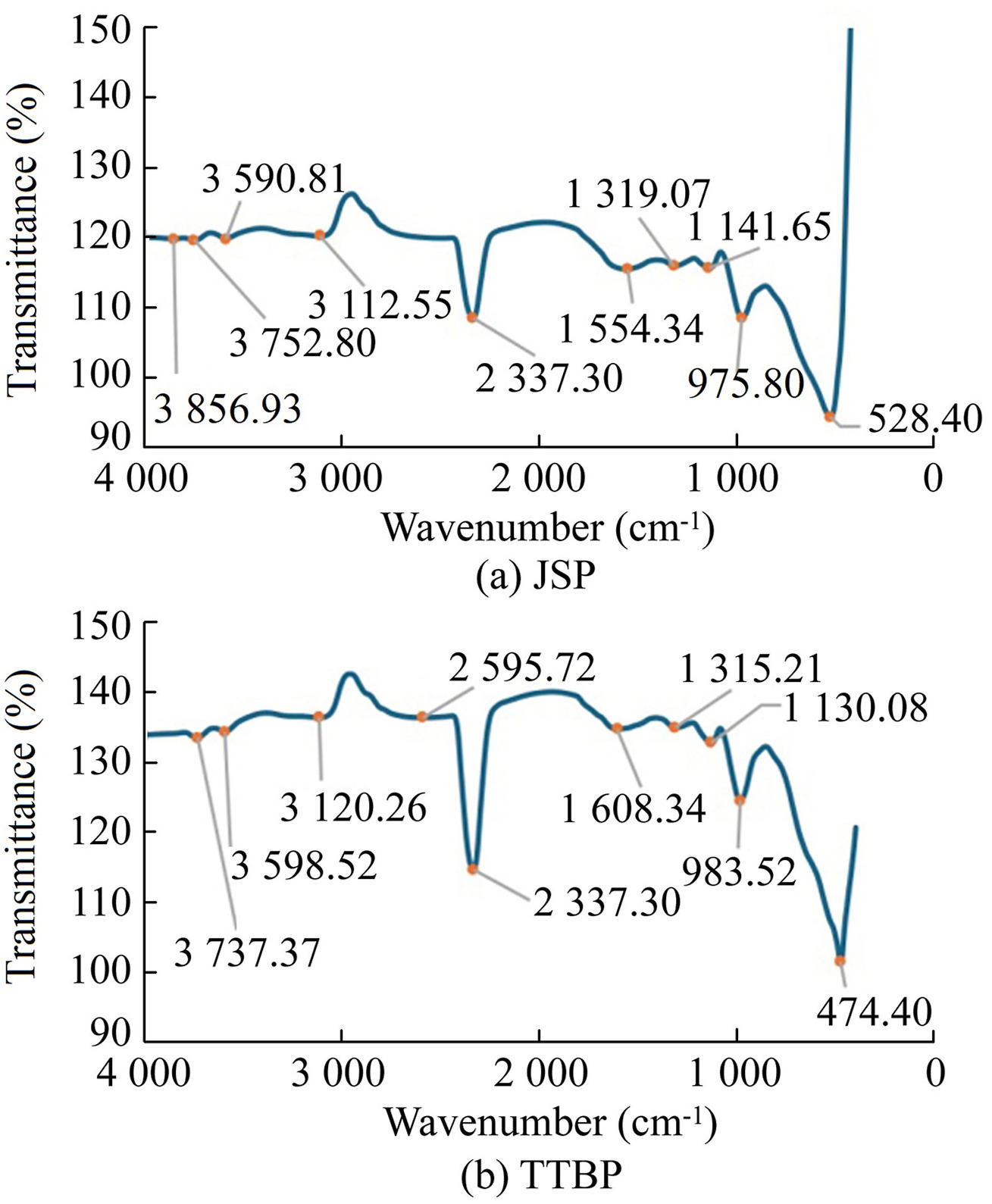
Figures(1)


 DownLoad: